Enabling the Soul of Space: Neurodiversity & UDL
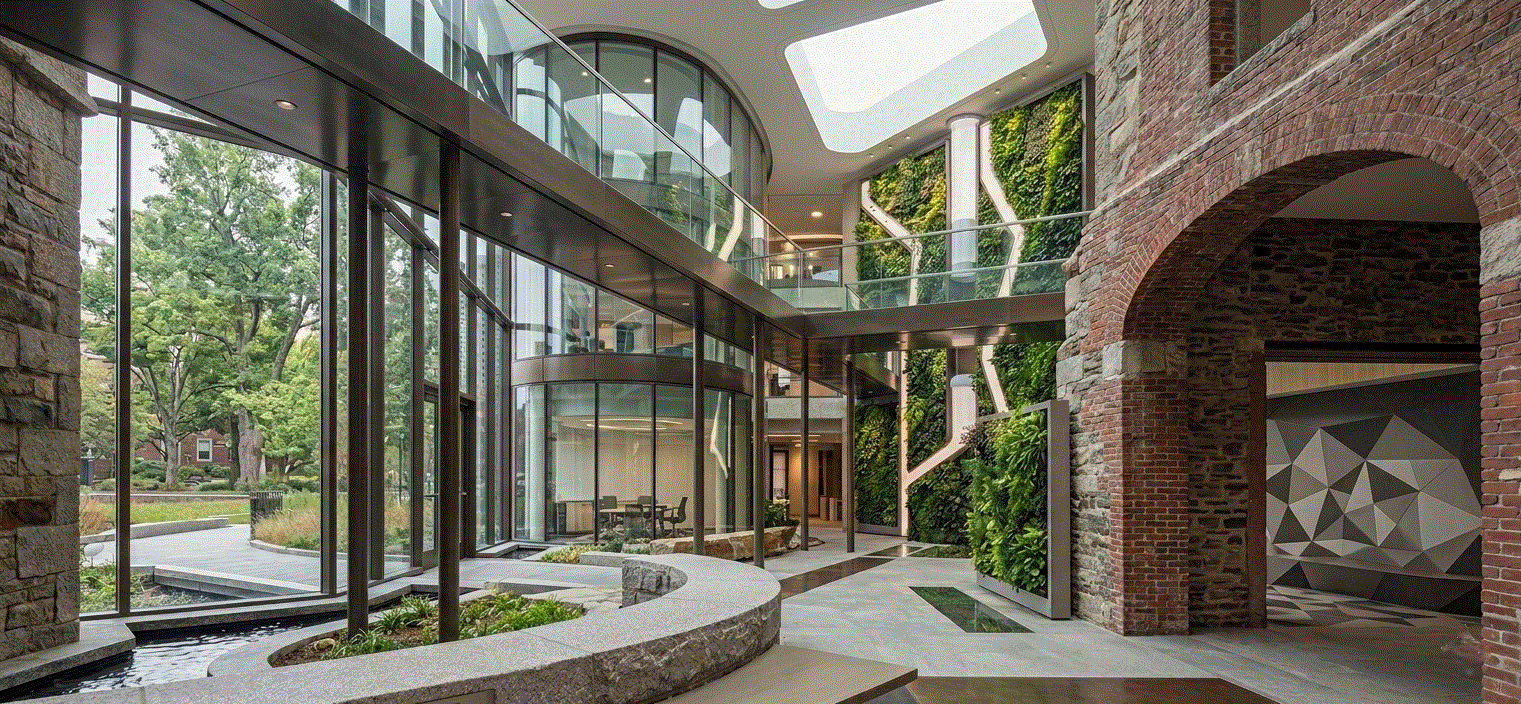
Sensory Symphony: Natural light as a tool for neurological well-being.
Contemporary school architecture must evolve into a sentient organism. My holistic vision stems from the belief that physical space acts as a "silent teacher": every acoustic resonance, every chromatic spectrum, and every flicker of natural light can either be a catalyst for inclusion or an insurmountable barrier for neurodiversity.
By embedding Universal Design for Learning (UDL) at the core of architectural design, we move beyond the obsolete concept of "removing physical barriers." Designing for spatial neurodiversity means recognizing the vast spectrum of human needs: from sensory hypersensitivity to ADHD. Space must provide a balanced "sensory diet."
In this perspective, historical conservation and NZEB innovation are the dual poles of a new resilience. The school of the future inhabits ancient buildings, making them technologically high-performing and cognitively welcoming. It is an Urban Regeneration challenge that starts from the school building to heal the surrounding social fabric.
The quality of space is implicit pedagogy. Through natural materials, fractal geometries, and decompression zones, the building becomes a place of stillness, where beauty ceases to be an aesthetic ornament and becomes a fundamental civil right.
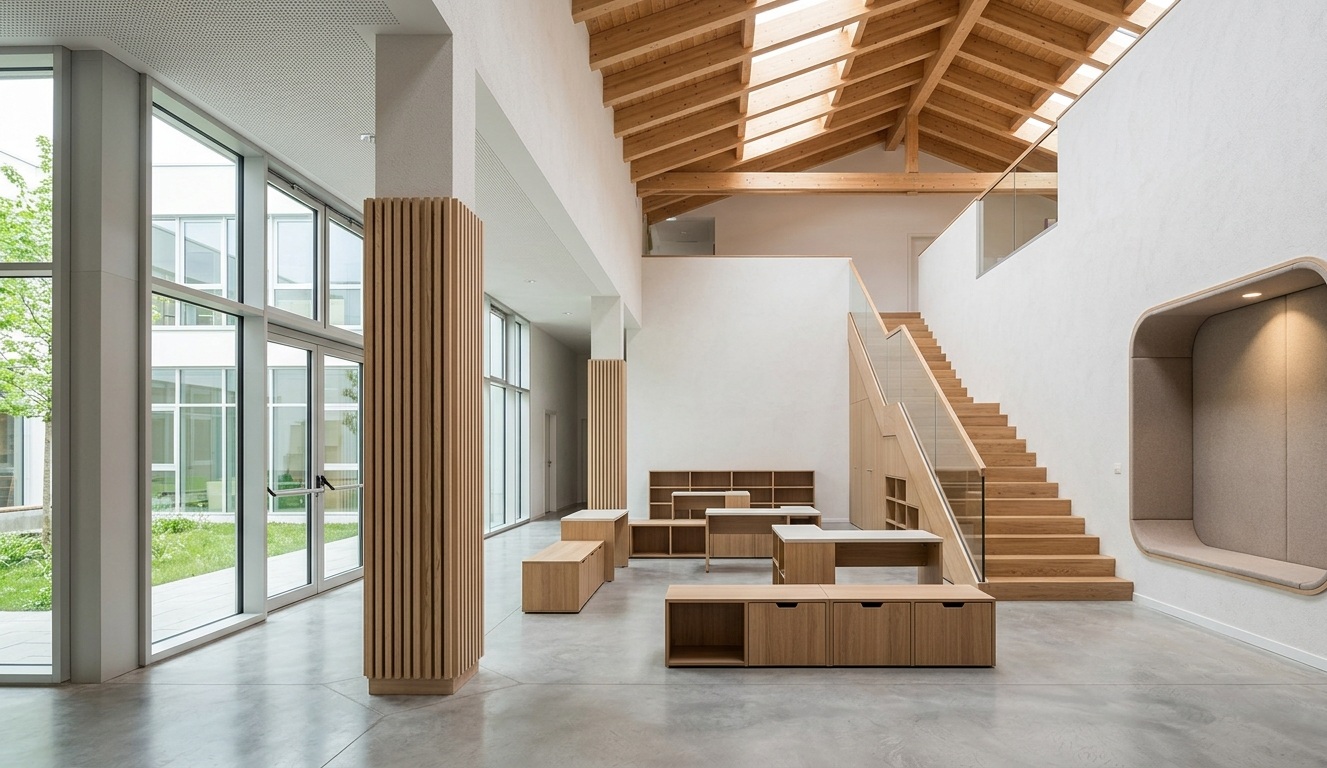
Architectural Synapse: Integrating layout flexibility and spatial clarity.
Sensory Symphony
Acoustic control, biodynamic lighting, and calibrated textures to reduce cognitive load and foster emotional regulation.
Resilient Heritage
Reconnecting with history through conservation, elevating period buildings to NZEB standards while respecting the Genius Loci.
UDL Governance
Applying UDL protocols to macro-architectural planning, ensuring operational flexibility and plurality of use.
Urban Regeneration
The school as a "Third Place" and a public health hub, connected to the territory through human infrastructure.

The Regenerated School: A biodynamic organism for the community of the future.
The Future of Italian Schools
Navigating the complexity of the PNRR requires a synthesis of vision and strategy, mediating between heritage authorities, administrations, and the educational community. I transform bureaucratic constraints into architectures of possibility.
Strategic Consultancy